

























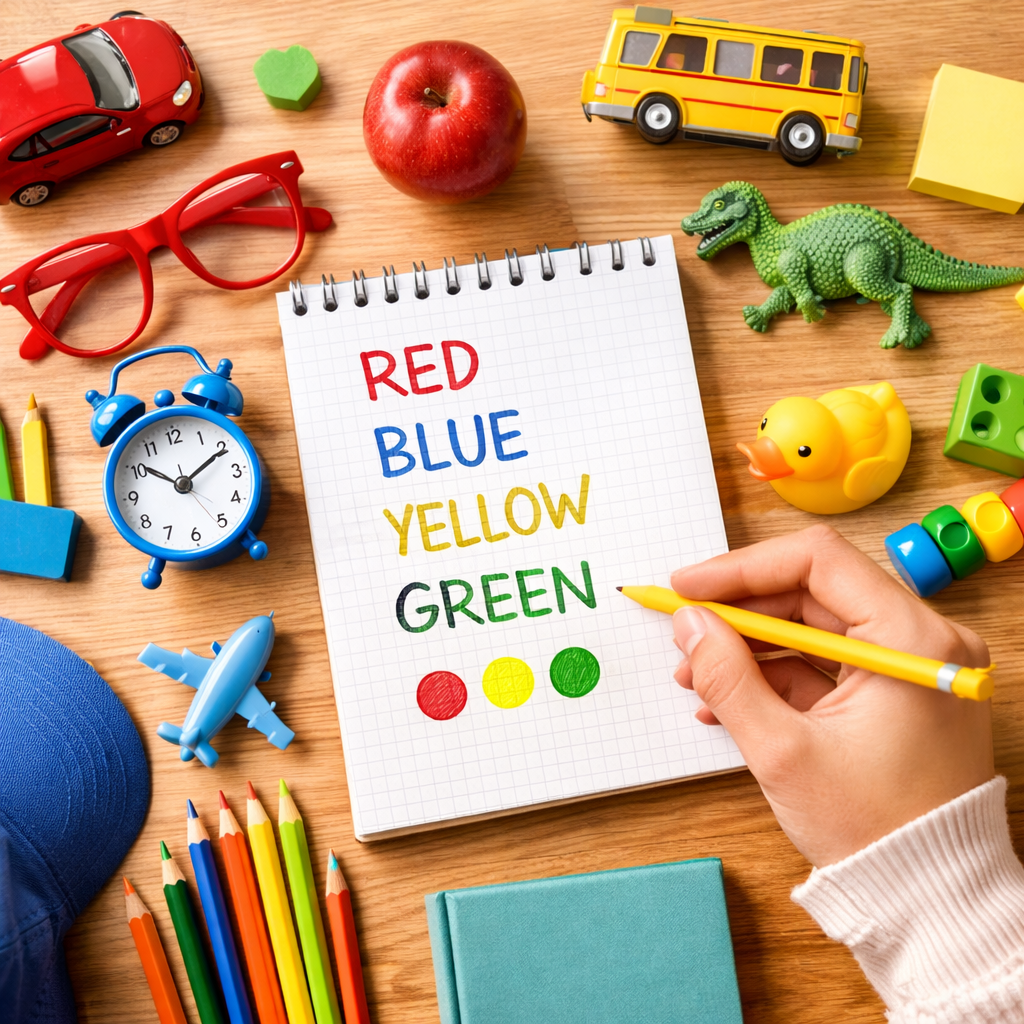
Colors are everywhere around you. Every day, you see them in your clothes, your food, and the world outside. Learning basic color names in English is one of the first and most exciting steps in your language journey. With just a few simple words, you can start describing what you see. This lesson will teach you the most important colors in English — and you will be surprised how quickly you can use them!
Definition
Color names are basic vocabulary words that we use to describe the appearance of objects, people, and places. In English, the most common colors are red, blue, green, yellow, orange, purple, pink, white, black, and brown. These words are simple, short, and very easy to remember.
We use color words every day in real conversations. For example, you can say "The sky is blue" or "I have a red bag." Colors help you give more information and make your English clearer and more natural.
Why Should You Learn This?
Knowing color names is a fundamental skill for every beginner. Colors appear in almost every conversation — shopping, describing people, talking about nature, or even reading a menu. Without color words, it is very difficult to communicate clearly. Learning them now gives you a powerful tool for everyday life. It is a small step with a big impact on your English confidence.
Key Points
- 10 Essential Colors: The most important colors to learn first are red, blue, green, yellow, orange, purple, pink, white, black, and brown.
- Simple and Short Words: Most basic color names in English are only one word and very easy to pronounce.
- Used Every Day: Color words appear in daily conversations about clothes, food, places, and objects.
- Adjective Function: In English, colors are adjectives — they describe nouns. For example: a blue car, a red apple.
- Color Comes Before the Noun: Always place the color word before the object it describes. Say "a green tree," not "a tree green."
- Easy to Practice: You can practice color words anywhere — just look around and name the colors you see in English.
- Building Block for More: Mastering basic colors helps you learn more advanced vocabulary later, such as light blue, dark green, or bright yellow.
Example Sentences
- The apple is red.
- She has a blue umbrella.
- Look at that green tree!
- My favorite shirt is yellow.
- He drives an orange car.
- The flowers are pink and purple.
- I have a white cat and a black dog.
- That old table is brown.
- The sky looks very blue today.
- Can I have the green one, please?
Usage Areas
Color words appear in almost every situation in daily English. Whether you are at a store, talking to a friend, or reading a sign, you will need them. They work as adjectives — placed directly before the object they describe — and they make your sentences richer, clearer, and far more natural.
Shopping and Clothing
When you go to a store, color words become essential. You might say "I want the red jacket" or "Do you have this in green?" Without these words, pointing and guessing replaces real communication. Color helps you find exactly what you need — quickly and confidently.
Describing Nature and Surroundings
Outside, color is everywhere. You can describe the world with simple phrases like "the blue river," "a yellow flower," or "brown mountains." This skill is especially useful when telling someone about a place or giving directions, such as "Turn at the white building."
Talking About Food
At a restaurant or market, colors guide your choices. Saying "I want the orange juice" or "That red fruit looks delicious" shows how color connects directly to everyday eating and drinking situations.
Identifying and Comparing Objects
When two similar objects are near each other, color is the fastest way to distinguish them. For example: "Not that bag — the black one." Short, direct, and instantly understood. Color words save time and remove confusion in real conversations.
Step-by-Step Learning Guide
- Step 1: Start with the Core Ten. Focus on the ten most common color words first — red, blue, green, yellow, orange, purple, pink, white, black, and brown. Write each one on a separate card and say it out loud several times.
- Step 2: Connect Each Color to an Object. Link every color to something familiar. Think red = apple, blue = sky, green = grass. This mental picture technique makes each word stick far more effectively than memorizing a list alone.
- Step 3: Practice the Correct Word Order. Remember — the color always comes before the noun. Repeat short phrases aloud: a red apple, a blue pen, a black bag. Do this until the order feels completely natural.
- Step 4: Look Around and Label. Choose a room in your home. Point at five objects and describe each one in English using a color word. For example: a white wall, a brown door, a yellow lamp. Make this a daily habit.
- Step 5: Build Simple Sentences. Move beyond single words and phrases. Construct full sentences like "My chair is brown" or "I see a green plant." This step bridges vocabulary knowledge and real communication.
- Step 6: Review with Flashcards or Quizzes. Test yourself regularly. Cover the word and try to recall it from the color, or cover the color and name it from a picture. Short, frequent review sessions are far more effective than one long study period.
- Step 7: Use Colors in Real Conversations. The final step is the most important — speak. Describe your outfit to someone, name the colors on a food package, or tell a friend about something you saw outside. Every real use of a color word builds lasting confidence in your English.
Summary
In this lesson, you explored the ten essential color words in English — red, blue, green, yellow, orange, purple, pink, white, black, and brown — and discovered how naturally they fit into everyday speech. You learned that colors function as adjectives and always appear before the noun they describe, as in a blue sky or a red apple. These words show up in countless real-life situations, from choosing clothes at a shop to describing the world around you. With just these ten building blocks, your ability to communicate in English grows stronger with every sentence you speak. Keep looking around, keep naming what you see, and watch your confidence rise day by day.
Color Reference Table
| Color Word | Example Object | Example Sentence |
|---|---|---|
| Red | Apple | The apple is red. |
| Blue | Sky | The sky is blue. |
| Green | Grass | The grass is green. |
| Yellow | Sun | The sun is yellow. |
| Orange | Orange fruit | This orange is orange. |
| Purple | Flower | That flower is purple. |
| Pink | Shirt | Her shirt is pink. |
| White | Snow | The snow is white. |
| Black | Night sky | The night sky is black. |
| Brown | Wood | The table is brown. |
Tips and Tricks
- Use what you see: Every time you enter a new room, silently name three objects and their colors in English. This turns any environment into an instant practice space.
- Pair colors with strong images: Link each color to one vivid picture — red = fire truck, blue = ocean, green = forest. A strong visual anchor makes recall much faster and more reliable.
- Say it before you write it: Always pronounce a color word aloud before writing it down. Hearing yourself say yellow or purple helps your brain store both the sound and the spelling at the same time.
- Describe your clothes every morning: Before you leave home, say one sentence about what you are wearing — for example, I am wearing a white shirt and blue jeans. This short daily habit builds enormous fluency over time.
- Group similar shades later: For now, focus on the core ten. Once they feel natural, you can expand to light blue, dark green, or bright yellow — but a solid foundation comes first.
Common Mistakes
Incorrect: I have a bag red.
Correct: I have a red bag.
Explanation: In English, color adjectives always come before the noun, not after it. Place the color word directly in front of the object it describes.
Incorrect: The sky is a blue.
Correct: The sky is blue.
Explanation: When a color follows the verb to be as a predicate adjective, no article is needed. Simply say is blue, not is a blue.
Incorrect: She wears a cloth green.
Correct: She wears a green shirt.
Explanation: Always name the specific object and place the color before it. Avoid placing the color at the end of the phrase.
Incorrect: I want the color red one.
Correct: I want the red one.
Explanation: You do not need to say the word color before the adjective. The color word alone is enough to describe the object clearly.
Conclusion
You have now taken a meaningful step forward in your English journey by mastering one of its most vivid and versatile vocabulary sets. Ten small words — yet they unlock the ability to describe almost everything you encounter in daily life, from the clothes you wear to the landscapes you admire. Every conversation you join, every object you point to, every sentence you form with a color word is proof that your English is growing. Do not wait for the perfect moment to speak — the world around you is already full of colors, and now you have the words to name them. Carry these words with you, use them freely, and enjoy the confidence that comes with truly seeing the world in English.